
Negotiate Airbnb Prices For Long-Term Stays: How to Negotiate Airbnb Prices for Long Stays
Can you really ask for a lower Airbnb price on a long-term stay, or will a host simply reject the request? You can negotiate, but the strongest requests are based on clear numbers, useful dates, and a believable reason for the host to accept less. A vague message asking for the “best price” rarely works.
Long stays have a different cost structure from two- or three-night bookings. The host may avoid repeated cleaning, reduce empty nights, and spend less time managing check-ins. Your job is to turn those savings into a fair offer while checking the full checkout total, house rules, cancellation terms, and payment risk.
Why Hosts Offer Lower Prices for Longer Stays
Long bookings reduce the host’s fixed costs
A short reservation creates several costs that do not rise in direct proportion to the number of nights. The host may pay for laundry, cleaning, guest messages, key handovers, restocking, and small repairs after every departure. A 30-night guest usually creates one turnover instead of four or five. That gives the host a reason to accept a lower nightly rate.
Long stays also reduce vacancy risk. Suppose a host lists a property at $120 per night. A full 30-night calendar would show $3,600 in base rent, but a few empty nights can cut that figure quickly. An offer of $3,060 for the month gives the host a guaranteed booking and saves you $540 before taxes and platform fees. The host may prefer that certain income to a higher theoretical total that never arrives.
Your dates matter more than your charm
The best bargaining position comes from dates that solve a host’s calendar problem. A booking that fills a gap between peak periods is more attractive than a request for the busiest month of the year. Check-in flexibility helps too. Moving your arrival by two days may connect two otherwise awkward calendar blocks and create more value than another paragraph about your budget.
The discount must leave the host with a sensible result
Do not treat the displayed monthly price as pure profit. A host still has a mortgage or rent, utilities, insurance, supplies, local taxes, maintenance, and possible income-tax obligations. Your request becomes more credible when you ask for a defined percentage rather than demanding an arbitrary amount. A starting offer around 10% to 15% below the listed long-stay price is usually easier to defend than a 40% cut, unless the calendar shows a serious vacancy problem.
Verdict: Long-stay negotiation works best when your booking lowers turnover and vacancy costs. You are selling certainty, not asking for charity.
Which Airbnb Price Should You Negotiate?
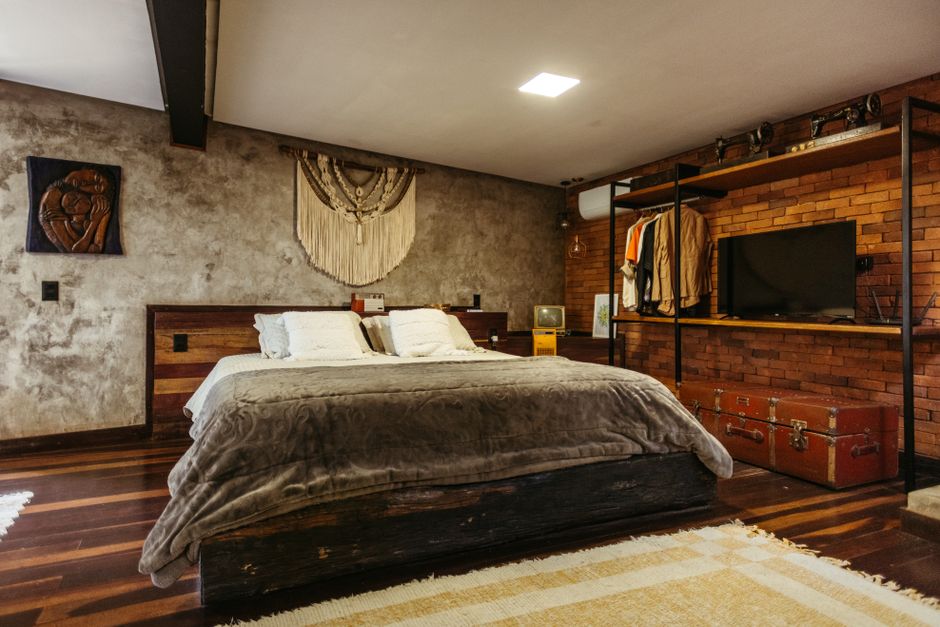
Not every part of a reservation is controlled by the host. Separate the base accommodation rate from cleaning, service, tax, and payment costs before making an offer. These figures are illustrative examples, not live quotes, but they show why a lower nightly rate may produce a smaller saving than expected.
| Charge or booking option | Illustrative amount | Can you negotiate it? | Best approach |
|---|---|---|---|
| 30-night base rent | $3,000 | Usually yes | Request a 10% to 15% monthly reduction |
| Cleaning fee | $180 | Sometimes | Ask if one end-of-stay clean replaces repeated turnovers |
| Platform service fee | $390 | Usually no | Include it in your total-cost calculation |
| Local tax | $150 | Rarely | Check the destination’s legal tax rules |
| Utilities | $120 estimated | Often | Confirm the monthly cap or included usage |
Start with the monthly rate
The base rent is the cleanest negotiation target. If the listed monthly price is $3,000, a 12% reduction produces an offer of $2,640. You can explain the calculation in one sentence and state that you are ready to book the full 30 nights. Never assume the host will reduce the service fee or tax just because the base rate falls.
Ask about cleaning and utilities separately
A 30-night stay may justify a lower cleaning charge because the host avoids several turnovers. Utilities require more care. Some hosts include electricity, water, heating, and internet; others set a monthly limit and charge for overuse. Ask for the exact limit in writing. A $100 discount is not a discount if a heating bill later adds $250.
Compare the total, not the headline price
A useful comparison includes every mandatory charge. A $2,700 monthly rental with $500 in fees can cost more than a $2,900 rental with $100 in fees. Compare the final checkout total, then add expected transport, laundry, internet, deposits, and cleaning supplies. Bottom Line: Negotiate the base rate first, but accept only after the full 28- or 30-night cost makes sense.
How to Make an Offer a Host Can Accept
Use a short message with five facts: your dates, guest count, purpose of the stay, price you can pay, and booking speed. Hosts need to judge risk quickly. A message that answers the obvious questions removes work and makes your request look serious.
- Choose the exact dates. “I need somewhere in Lisbon for about a month” is weak. “I need one guest from October 6 to November 5” gives the host a usable calendar block.
- Explain the practical benefit. Say that you will stay for the full period, work remotely, care for the property, or avoid frequent visitors if that is true. Do not invent a personal story to pressure the host.
- Check the existing monthly discount. Many long-stay listings already lower the nightly price automatically. Calculate the displayed monthly base rate before asking for another reduction.
- Make one specific offer. Offer $2,650 on a $3,000 monthly base rather than asking, “How low can you go?” A host can accept, decline, or counter a number.
- Show booking readiness. State that you can reserve promptly if the host agrees to the price and terms. Do not claim that you are ready if you still need visa approval, employer approval, or transport confirmation.
- Confirm the deal inside the platform. The final price, dates, guest count, utility terms, and included services should appear in the formal reservation. Do not send money through a private bank transfer to avoid platform charges.
A message template with enough detail
“Hello, I like the apartment and would like to book it for one guest from October 6 to November 5. I will work quietly from the property and need the full 30 nights. The current monthly base price is $3,000. Since the stay gives you one booking and one cleaning cycle, would you consider $2,650 before platform fees and taxes? I can book promptly if the dates and utility terms work for you.”
When to send the request
Send the first message before submitting a non-refundable request or payment. A host has more room to negotiate when the calendar is open and the dates are not approaching a major festival, holiday, or school break. If the property has many unbooked nights within the next two to four weeks, your guaranteed stay may carry extra weight.
Do not send repeated offers after a clear rejection. One polite counteroffer is reasonable. Three increasingly lower messages make you look unreliable and can end the conversation.
The Best Offer Is Specific, Fair, and Easy to Approve

My recommendation is simple: open at 10% to 15% below the listed monthly base rate, then stop negotiating once the host gives a fair counteroffer. That range is large enough to create a real saving but small enough to show that you understand the property has operating costs.
For a $2,800 monthly rate, a 15% opening offer is $2,380. If the host counters at $2,550, the saving is $250, or about 8.9%. That is a stronger outcome than pushing for an extreme discount and losing the booking, especially when similar homes are scarce.
Use a lower opening offer only when you have evidence: several empty weeks, a dated listing, flexible dates, or a clear gap between existing reservations. Do not use a low offer to punish a host for a small kitchen, an inconvenient location, or average photos. Those are reasons to choose another property, not reasons to demand a dramatic cut.
On the other hand, pay the listed rate when your dates fall during a peak event, the home has strong recent reviews, or the host already applies a large monthly discount. The strongest negotiation is sometimes no negotiation. Bottom Line: A fair, precise offer protects your credibility and gives the host a rational reason to say yes.
Long-Stay Airbnb Negotiation Questions Answered
Can I ask for a discount before booking?
Yes. Message the host before you book and ask about the total price for your exact dates. Hosts can explain the existing monthly discount, utility limits, cleaning terms, and any local rules. Keep the conversation on the platform so the agreed details remain easy to check.
How much should I offer below the listed price?
Start 10% to 15% below the listed monthly base price. A 20% request can work when the property has a near-term vacancy or your dates fill an awkward gap, but it is too aggressive for a high-demand period without supporting facts. Never calculate your offer from the nightly price alone if the listing already includes a long-stay reduction.
Can a host remove the Airbnb service fee?
Usually, the host does not control platform service charges or legally required taxes. Ask the host to reduce the accommodation rate instead, then review the checkout total. If a host promises a fee waiver that does not appear in the official reservation, treat the promise as unconfirmed.
Should I offer a cash payment for a lower price?
No. A private cash or bank-transfer arrangement can remove platform protections, create payment disputes, and break the platform’s rules. It also makes it harder to prove what the host promised about the property, deposit, utilities, or cancellation terms. A modest official discount is safer than a large off-platform deal.
Can I negotiate after the reservation is confirmed?
You can ask about a change, but the host is not required to lower the price after confirmation. If your plans change, request a formal modification through the platform. Never cancel a protected reservation because a host says they will recreate it later at a lower rate.
What if the host accepts but changes the terms?
Review the updated reservation before paying. Check the dates, number of guests, cleaning charge, deposit, internet access, workspace, heating, and utility cap. If the written reservation differs from the messages, rely on the formal terms and ask for a correction before arrival.
When Airbnb Is the Wrong Choice for a Long Stay

Airbnb is not automatically the cheapest monthly housing option. It wins when you need a furnished home, a kitchen, a neighborhood location, and a flexible arrival date. It loses when you need daily housekeeping, a fixed corporate invoice, guaranteed utilities, or a contract that local law treats like a standard tenancy.
| Option | Illustrative 30-night base cost | What you gain | Main drawback |
|---|---|---|---|
| Airbnb monthly stay | $2,550 after a negotiated discount | Furnished space and kitchen | Cleaning, service fees, and house rules may raise the total |
| Vrbo monthly rental | $2,700 sample base quote | Another inventory pool for comparison | Discount and fee rules vary by property |
| Booking.com apartment | $2,850 sample base quote | Useful for checking flexible cancellation options | Monthly availability is uneven by destination |
| Residence Inn by Marriott | $4,350 at a sample $145 nightly rate | Hotel support, front desk, and possible housekeeping | Higher base cost and less residential space |
Compare alternatives before you negotiate
Check Airbnb against Vrbo, Booking.com apartment listings, local serviced apartments, and extended-stay hotels. The point is not to threaten the host with a competitor. The point is to know your walk-away price. If a comparable furnished apartment costs $2,650 all-in, you should not accept a supposedly discounted Airbnb reservation that reaches $3,300 after fees.
Watch for deposits, bills, and payment interest
Ask about security deposits, utility caps, cleaning supplies, laundry, parking, and internet speed. A low monthly rate can become expensive when the host adds a $500 deposit and bills electricity separately. If you carry the reservation on a credit card, interest can erase the saving; many cards charge roughly 20% to 30% variable APR, while foreign-transaction fees can range from 0% to 3%. Check your own card terms. This is not financial advice.
Know when to walk away
Walk away when the host asks for off-platform payment, refuses to state the full price, pressures you to book immediately, hides utility rules, or offers a discount only through an informal message. For a long stay, trust and documentation matter more than saving another $50.
The traveler who starts with a clear 30-night budget, offers a fair monthly figure, and checks the full checkout total has the best chance of success. In the opening example, a $3,000 monthly base could become $2,550 after a sensible negotiation, but only if the fees and rules still fit the budget. That is the real goal: a lower, documented total that works for both sides.

Kyoto Travel Guide 2026: 4 Days of Real Culture

Kyoto Travel Guide 2026: A Four-Day Cultural Itinerary
About The Author
