
Galvin Bistrot & Bar in Spitalfields
Is Galvin Bistrot & Bar worth booking, or has it become one of those London restaurants living entirely on a reputation it earned fifteen years ago?
That is the real question when you are deciding whether to make a reservation on Commercial Street. The honest answer involves knowing what this restaurant actually is, what the kitchen does well, and — just as usefully — when it is the wrong choice entirely.
Why French Bistrot Cooking Is Hard to Get Right in London
Most restaurants calling themselves French bistros in London are either overpriced imitations or theme parks aimed at visitors who associate France with checked tablecloths and a waiter who calls them monsieur. The real thing — a bistrot in its original sense — is a neighbourhood restaurant with a tight menu, daily specials, and cooking that sounds simple but demands consistent execution across every service.
Steak frites is three ingredients. Getting it right every night, on every table, at a price that keeps the margins workable — that is hard. Most London bistrot-style restaurants cut corners on ingredients or inflate prices to cover the gap. The result is usually mediocre food at premium prices, saved marginally by a decent French wine list.
The economics in London are brutal. A genuine bistrot model depends on volume and repetition: the same twenty dishes, perfected over years, sold at tight margins that only work if the dining room turns over consistently. Central London venues rarely achieve the kind of regular, local custom that makes this viable. They end up catering to tourists, which drives food quality down, or positioning themselves as special-occasion spots, which drives prices up and visit frequency down. Either path undermines the model.
What Bistrot vs. Brasserie Actually Means for Your Meal
A bistrot is smaller, slower, and more personal than a brasserie. Brasseries handle volume: long hours, large rooms, broad menus. A bistrot has a tighter menu, shorter service windows, and cooking that requires the chef’s direct attention on each dish. When the Galvin brothers opened Galvin La Chapelle around the corner on Spital Square — a brasserie in a converted Victorian chapel — they were deliberately building a different product for a different purpose. La Chapelle seats hundreds and serves until late. The bistrot seats a fraction of that and closes the kitchen at 10pm.
At Galvin Bistrot, the dinner menu runs to fifteen or eighteen dishes total. That is intentional. A kitchen doing fifteen dishes well beats a kitchen doing forty dishes adequately. This constraint is the first signal that the restaurant is serious about its cooking.
Why the Galvin Brothers’ Name Still Carries Weight
Chris and Jeff Galvin are not absentee celebrity chefs licensing their name to an operator. Chris trained under Marco Pierre White at The Canteen — a serious kitchen with no tolerance for shortcuts. The brothers built their reputation on classical French technique without trend-chasing: no foam, no deconstructed sauces, no theatrical tableside theatre. When food at Galvin Bistrot slips, it gets noticed and it is news. That accountability is rare at this price point in London, where many restaurants rely on marketing to obscure inconsistency.
What Galvin Bistrot & Bar Actually Is
The Spitalfields restaurant opened in 2005 on Commercial Street, E1. The room is warm and unhurried: dark wood panelling, tiled floors, proper linen on tables without being stiff about it. Art deco touches without costuming the whole room. The noise level sits at a working buzz — conversation doesn’t require effort, but you’re not eating in a library either.
This is not a fine dining restaurant. No amuse-bouche, no tasting menu, no sommelier hovering. You get a menu, you order, and the food arrives properly cooked. That simplicity is the whole point. The gap Galvin Bistrot fills is between a gastropub and a formal French restaurant — and it fills it consistently.
Bar vs. Restaurant Floor: Two Different Experiences
The front bar and the restaurant floor behind it function as separate rooms for separate purposes. The bar takes walk-ins from early evening, serves cocktails and small plates, and suits anyone who wants flexibility. The restaurant floor requires a reservation for dinner — especially Thursday through Saturday — and follows a more structured service rhythm.
You can eat a full meal at the bar if you prefer. Some regulars do exactly that. It is less formal, service is more flexible, and it suits solo diners or pairs who don’t want to commit to a long, structured evening. The trade-off: service gets stretched at the bar when the room fills.
Book via the Galvin website or OpenTable at least three to four days ahead for Thursday through Saturday dinner. Lunch midweek is more forgiving — call the day before or walk in. The restaurant sits five minutes from Liverpool Street station on foot (Central, Circle, Hammersmith & City, Metropolitan, and Elizabeth lines all stop there).
The Dishes That Actually Hold Up
Not a comprehensive menu rundown — specifically the dishes where the kitchen consistently delivers above expectations.
- French Onion Soup (£12) — The signature and a genuine benchmark. The broth is deeply caramelised, the crouton properly softened underneath and crisped on top, the Gruyère crust formed under a grill not a heat lamp. This dish takes time to make well. Order it regardless of what follows.
- Pithivier of Game (seasonal, around £24–£26) — A pastry-encased game filling, usually partridge or pigeon depending on availability. Only on the menu during game season, roughly September through February. This is where the kitchen shows its technical range. If it is there, it is the right choice.
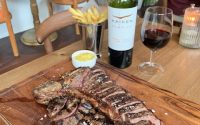
- Côte de Boeuf for Two (around £75–£80 for two) — A 500g bone-in rib, rested and served with hand-cut frites and béarnaise made to order, not from a squeeze bottle. The tarragon is fresh. Order it medium rare. One of the few shared dishes in London at this price point that actually justifies the format.
- Calf’s Liver with Bacon and Sage Butter (£23) — A dish that exposes kitchen shortcuts immediately when they exist. At Galvin, the liver is properly pink rather than grey, and the sage butter is fresh rather than having sat in a warm pan for three hours. If you eat liver, order it.
- Croque Monsieur at Lunch (£14) — Lunch menu only. Brioche bread, thick-cut ham, proper béchamel grilled until it bubbles. A benchmark dish for any bistrot. This one clears it comfortably.
The duck confit is competent but not a standout — skip it if you have had better elsewhere. Fish specials on the board consistently outperform the fish dishes on the standing menu; they are fresher and get more kitchen attention. For dessert, order île flottante over the chocolate fondant: lighter, distinctly French, and the less obvious call — which usually means it is the better one.
What a Meal at Galvin Bistrot Actually Costs
| Scenario | What You’re Ordering | Cost Per Person |
|---|---|---|
| Weekday lunch, solo | Croque monsieur + glass of Muscadet | £22–£28 |
| Casual dinner, two courses | Onion soup + main, one glass of wine | £40–£50 |
| Full dinner, three courses + wine | Starter, main, dessert, half bottle | £65–£80 |
| Côte de boeuf dinner for two | Shared steak, sides, bottle of Burgundy | £50–£60 each |
| Bar only, pre-dinner or standalone | Two cocktails + charcuterie board | £35–£45 total for two |
A 12.5% service charge is added automatically to the bill. Budget for it from the start. The wine list leans French and is sensibly assembled: house Muscadet by the glass runs around £8 and drinks well; the bottles you will actually enjoy sit between £40 and £65. There are options below £35, but they are there for the list’s optics rather than for drinking.
By London standards for this tier of cooking, the pricing is fair but not cheap. You are not walking out surprised at how little you spent. What you are getting is technically correct French cooking in a room that has been properly maintained over two decades — that combination is less common than it should be.
When Galvin Bistrot Is the Wrong Restaurant for Your Night
This is not a celebration restaurant. Skip it for proposals, significant birthdays, or anything that needs ceremony. For those occasions, go to Galvin at Windows on the 28th floor of the London Hilton on Park Lane instead — the tasting menu runs £95–£130 per person and brings the view, the formality, and the service structure a milestone evening actually requires. Galvin Bistrot is excellent food in a warm room. It is not ceremony.
Also skip it if any of these apply:
- Your group includes vegetarians who are not enthusiastic about French classics. The menu has vegetarian options, but this is a meat-forward kitchen and the vegetarian dishes are not where the kitchen’s attention goes.
- Your budget for dinner is under £35 per person. It will not work out comfortably once you account for a drink and service charge.
- You want late-night energy. Last food orders are 10pm on weekdays and 10:30pm on weekends. This is not a midnight dinner option.
- You are booking for eight or more. The kitchen maintains quality better at smaller table sizes. Large groups are accommodated but the experience becomes less consistent.
Alternatives worth knowing: Brat on Redchurch Street — about a twelve-minute walk, wood-fire cooking, tasting menu structure at £75–£95 per person — handles the celebration tier better. Lyle’s in the Tea Building on Shoreditch High Street does a set lunch around £55 that competes with Galvin’s dinner on value if modern British cooking appeals to you. For something casual and under £20, Bleecker near Liverpool Street does the best burger in the area at £12–£14.
The Bar as a Standalone Visit: Three Direct Questions
Can You Just Drink Here Without Eating?
Yes. The bar area takes walk-ins with no reservation needed. The charcuterie and cheese boards (£14–£18) are worth ordering alongside drinks — proper French cold cuts with cornichons and good mustard, not a supermarket selection rearranged on a wooden board. A couple of cocktails and a board works as a light evening on its own.
Is the Cocktail List Worth Ordering From?
It is a classic list made correctly, not a creative list trying to impress. Negroni, Old Fashioned, French 75, Sidecar — all built properly. The French 75 (£13) uses Champagne rather than Prosecco, which is the single detail that separates a real version from a shortcut. The Negroni (£13) is stirred cold and not oversweetened. If you want seven-ingredient cocktails with a printed booklet explaining the flavour journey, this is not your bar. If you want a well-made drink before dinner, it is exactly right.
Does It Work for a Group Pre-Dinner?
For two to four people, yes. Six or more gets physically awkward — the bar area is not built for groups standing around with drinks. In that case, The Culpeper on Commercial Street, five minutes from Galvin on foot, has more room and a rooftop when the weather holds. Walk back when your table is ready.

Edo Izakaya Japanese Restaurant, Old Street
Boundary Bar and Brasserie in Shoreditch

Discover Latvia
About The Author
