
Greece Hotels Ranked: Which Islands Deliver the Best Value
Greece has roughly 9,000 hotels spread across dozens of islands and a mainland most international tourists overlook entirely. That number is not helpful. What is helpful is knowing that hotel quality is deeply uneven by island, that official star ratings are an unreliable guide, and that booking in the wrong month costs more than booking the wrong property.
Here is the honest breakdown — specific hotels, real prices, and clear verdicts on where to spend and where to skip.
The Greek Island Hotel Tier System, Explained Honestly
The most useful frame for Greece hotel research is not star rating or budget category — it is which island you are on. Hotel quality clusters tightly by destination, and some islands simply do not have the property stock to support a luxury trip regardless of what you are willing to pay.
Santorini and Mykonos: Where the Flagship Properties Concentrate
These two islands carry Greece’s luxury hotel reputation, and the concentration of genuinely world-class properties justifies it. Santorini in particular has an extraordinary cluster of cave-house hotels built into the caldera rim — properties like Canaves Oia Epitome, Katikies Hotel, and Perivolas rank among the best in Europe on any credible global list. The architecture earns serious spend: whitewashed suites carved into volcanic cliffs, infinity pools that appear to empty directly into the Aegean, a sunset that consistently delivers on the photograph.
Mykonos is different in character. The hotels are strong — some genuinely exceptional — but the island’s draw is social rather than architectural. Part of what you are paying for is access to a specific scene: beach clubs, nightlife, an international crowd that concentrates here every summer. If that is what you want, Mykonos delivers it at a premium. If you want a quiet, private retreat, the value equation falls apart quickly.
Crete and Rhodes: Tier Two, Frequently Undervalued
Crete’s hotel market ranges from budget package resorts to genuine luxury, and the northeast coast around Elounda is where the top-tier properties concentrate. Domes of Elounda and Blue Palace Elounda both offer private beach access and consistent five-star service at prices roughly 30-40% below comparable Santorini properties. The beaches here are sandy — Santorini’s are volcanic black or red pebble, which surprises first-time visitors more than it should and matters significantly on a hot August afternoon.
Rhodes has a solid mid-market and a handful of genuinely good luxury properties around Lindos. The UNESCO-listed medieval old town is worth two nights on its own merits. But the island’s hotel stock is more resort-oriented than architecturally distinctive, and it caters heavily to a package-holiday demographic, which shapes what most properties are actually optimized for.
Paros, Naxos, and Folegandros: The Emerging Tier
These Cycladic islands have developed boutique hotel scenes that matured significantly over the last decade without the price inflation of Santorini or Mykonos. Paros in particular has built a strong hotel and restaurant cluster around Naoussa village. Expect €150-300 per night for properties offering genuine Cycladic architecture and good service. The trade-offs are real: fewer world-class restaurants, shorter tourist seasons, less infrastructure overall. For travelers not specifically chasing the famous-island experience, the value return here often outperforms the headline destinations.
Santorini Hotels: The Caldera View Premium, Broken Down
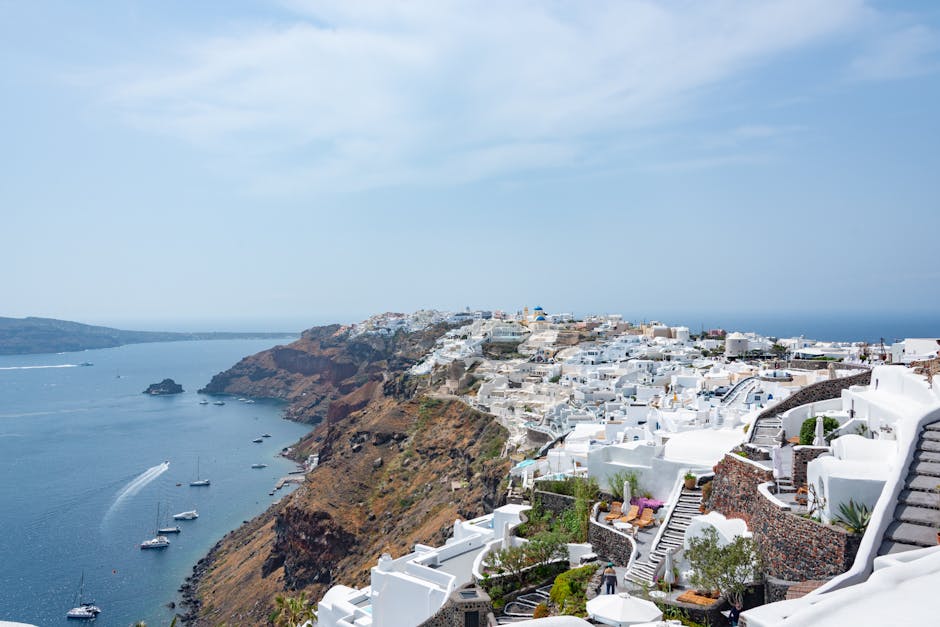
The caldera view is the most expensive single feature you can buy in Greece. A caldera-facing room typically costs 40-80% more than an equivalent room facing the village or sea on the same property. The table below uses September shoulder-season rates — add 50-80% for August across all properties.
| Hotel | Location | From (Sep) | Caldera View | Private Pool Option |
|---|---|---|---|---|
| Canaves Oia Epitome | Oia | €1,500/night | Direct | Yes |
| Katikies Hotel | Oia | €820/night | Direct | Yes |
| Andronis Luxury Suites | Oia | €700/night | Direct | Yes |
| Perivolas | Oia | €650/night | Direct | Yes |
| Grace Hotel Santorini | Imerovigli | €520/night | Direct | Yes |
| Santo Pure | Pyrgos | €360/night | Partial/sea | No |
Oia vs. Imerovigli: The Practical Difference
Oia is more photogenic and more congested — the famous sunset viewpoint draws hundreds of people every evening and has for years. Imerovigli sits higher on the caldera with equivalent views, and Grace Hotel Santorini runs about €300 per night cheaper than Katikies for comparable architecture and service standards. Over a five-night stay, that is €1,500 in savings for roughly the same caldera experience. The only genuine loss is walking-distance access to Oia’s village restaurants and the iconic viewpoint. Take a taxi instead and bank the difference.
How Long the View Stays Worth the Premium
The first morning watching sunrise over the caldera from an infinity pool is legitimately extraordinary. It is not a marketing exaggeration. By day four, it is furniture. For trips spanning two weeks across multiple islands, two or three caldera nights then moving on typically outperforms a full week at one property — both on cost and on what you actually remember from the trip.
Bottom Line: Grace Hotel Santorini (€520/night) in Imerovigli is the strongest value at the quality end. Canaves Oia Epitome (€1,500/night) is the ceiling option for travelers for whom the architecture itself is the experience and price is not the constraint.
The One Booking Mistake That Costs Most Greece Travelers Money
Booking in August.
Greek island hotel prices in August run 50-80% above shoulder season rates at every price point — from budget guesthouses to five-star caldera suites. The same room that costs €820 in late September runs €1,400 in mid-August in Oia. The islands are at peak capacity, the heat is relentless, and the famous sunset viewpoint in Oia operates as a standing-room event with hundreds of people. Late May, June, and September give you equivalent weather access, meaningfully lower prices, and actual space at the places you came to see. If the dates are not flexible, book six to nine months in advance — August availability at quality properties collapses faster than most travelers expect.
Mykonos vs. Crete: Two Hotel Markets With Almost Nothing in Common
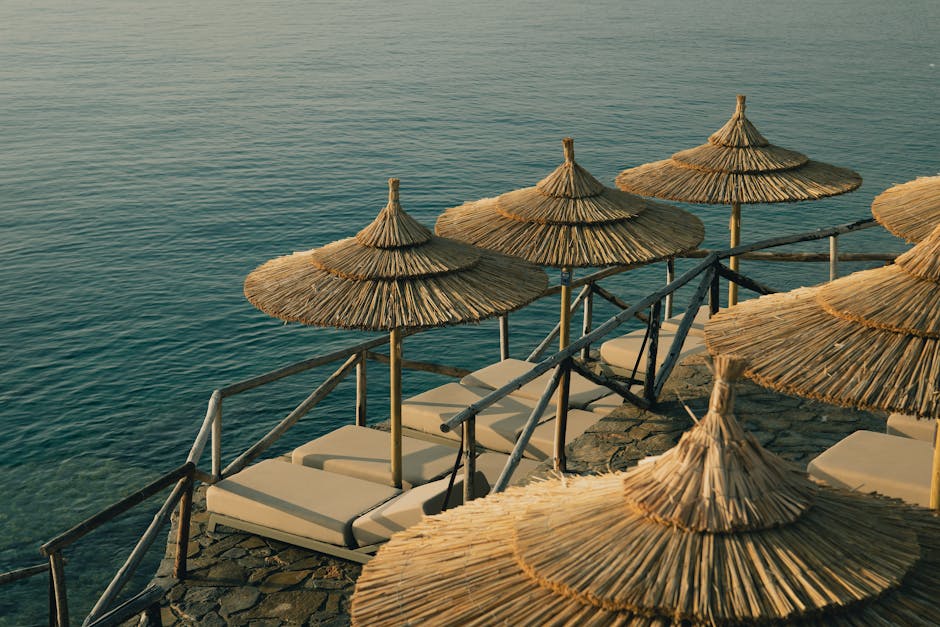
The comparison most travelers make between these two destinations misses the point. They serve different traveler types and charge for fundamentally different things.
Mykonos: When the Social Premium Makes Sense
Cavo Tagoo (from €800/night) and Bill and Coo Suites and Lounge (from €600/night) are legitimately excellent hotels. The design is some of the most considered in Greece, the infinity pools are genuinely dramatic, and service is polished throughout. But part of what you are paying for in Mykonos is access to the island as a social scene — the beach clubs, the nightlife infrastructure, the international crowd. If that experience is the actual point of the trip, the premium is honestly justified. If you want a quiet luxury retreat where the pool is empty at noon, you are overpaying for amenities you will not use.
Kensho Ornos (from €500/night) is the strongest value option for travelers who want Mykonos hotel quality without the full party-circuit premium. It sits on the calmer Ornos beach rather than the busier Paradise Beach area, attracts a slightly older demographic, and has a better design-to-price ratio than most of the island’s headline properties.
Crete’s Elounda Peninsula: The Serious Alternative
Domes of Elounda charges €550-800 per night for suites with private pools and direct sea access. The equivalent Santorini property runs €900-1,500. Add better beaches (actual sand), superior family facilities, and a food and beverage program that is genuinely ambitious by Greek island standards — and Elounda makes a compelling case as the best-value luxury destination in Greek hospitality. The view over Mirabello Bay is beautiful but not iconic, and that is precisely why it costs 40% less than the caldera.
Amirandes Grecotel near Heraklion (€300-500/night) is the strongest mid-range luxury option in Crete: lagoon pool, multiple restaurants, private beach, consistent five-star service. Not architecturally distinctive. The facilities hold up at the price.
Bottom Line: Mykonos earns its rates if the social scene is actually why you are going. For a quiet luxury retreat, Domes of Elounda delivers comparable or better facilities at 30-40% lower cost than the Santorini caldera tier.
What the 5-Star Classification Actually Means on a Greek Island
The Greek Tourist Organisation awards hotel star ratings based on facility thresholds: minimum room sizes, amenity checklists, restaurant counts, pool dimensions. A property can hold five official stars with genuinely dated décor and mediocre food if it clears the square footage minimums. This is not a theoretical risk — it is common at older resort properties on Rhodes and parts of Corfu that were classified during a different era of hospitality and have not been significantly updated since.
The classification gap is widest at three and four stars. Some of the best-run boutique hotels in Greece — well-designed, owner-operated, serving genuinely good food — hold three or four stars because they are too small to have a conference room or a second restaurant. The government checklist rewards facility volume, not quality of execution.
The filters that actually work: Booking.com scores consistently above 9.0 identify properties that outperform their official classification. TripAdvisor Travelers’ Choice recognition is similarly useful as a signal. Independent international designations like Relais and Chateaux membership require annual inspection against international standards — a more rigorous quality indicator than a government classification that is largely set once and rarely revisited.
Where to Stay If Santorini and Mykonos Do Not Fit Your Trip
What is the best hotel option in the Peloponnese?
Amanzoe, near Porto Heli on the Argolic Gulf, is the answer for travelers with budget flexibility. At €1,500-3,000 per night, it costs more than most Santorini caldera hotels — but the experience is structurally different: extensive land rather than cliff-edge density, immediate access to Peloponnese archaeological sites including Epidaurus, Nafplio, and Mycenae, and the staff-to-guest ratio that Aman properties maintain globally. The beach club is a 15-minute drive from the main property, which is either a dealbreaker or irrelevant depending on your priorities.
Which smaller island has the strongest boutique hotel quality right now?
Paros, specifically around Naoussa. The boutique hotel scene has developed more quickly here than on Naxos or Lefkada, and properties like Cosme Paros offer architect-considered design and genuine hospitality at €250-450 per night — roughly half the Santorini equivalent. The ferry from Athens Piraeus takes four hours, the local food scene has improved substantially over the last five years, and the beaches are sandy. It is the clearest current answer to the question of Santorini quality at a Santorini-minus-40% price for travelers not attached to the caldera view specifically.
Is there a budget-accessible Cycladic island with genuinely good hotels?
Folegandros. No cruise ship stops, no clubs, a Chora village that moves at a pace Santorini stopped having around 2012. Anemi Hotel is the best-known quality property on the island — clean Cycladic design, solid service, prices in the €180-350 range. The trade-off is limited restaurant choice and ferry connections that require more advance planning than the main islands. For travelers who find Santorini’s current density actively unpleasant, Folegandros is the most honest alternative in the Cyclades without crossing into obscure territory.



About The Author
