
Modern Cruise Ship vs Titanic: Comparing Size, Safety, and Luxury in
If maritime history is a book, the RMS Titanic is its most famous chapter, but modern cruise ships are the sprawling, multi-volume sequels that the original authors could never have imagined. Standing on the deck of a modern megaship, it is easy to forget that the foundations of this leisure-filled reality were laid in the tragedy of 1912. The anchor of the Titanic weighed approximately 15.5 tons. To the onlookers at the Harland and Wolff shipyard in 1911, it was an object of incomprehensible mass, a symbol of a ship that would dominate the waves through sheer physical presence. Yet, if you were to place that same anchor next to the power systems of a modern Oasis-class vessel, it would appear almost quaint. The fascination with comparing a modern cruise ship vs Titanic persists because it highlights the staggering trajectory of human engineering over a century.
Comparing the Physical Dimensions and Gross Tonnage
To understand the scale of a modern cruise ship vs Titanic, one must look past simple length and consider volume. Gross tonnage is a measure of internal volume, not weight, and this is where the gap becomes a chasm. The Titanic had a gross register tonnage of about 46,328. In contrast, the Icon of the Seas (approx. $2 billion), currently the world’s largest cruise ship, sits at 250,800 gross tons. This means the modern vessel has more than five times the internal space of the legendary White Star liner. While the Titanic was roughly 882 feet long, the Icon of the Seas stretches to 1,197 feet. While a 300-foot difference might not sound revolutionary, the width and height tell the real story. The Titanic was 92 feet wide; the Icon is 213 feet wide at its beam. This extra width allows for the stability required to stack 20 decks high, whereas the Titanic only had nine.
Key Specifications: Titanic vs. Icon of the Seas
| Feature | RMS Titanic (1912) | Icon of the Seas (2024) |
|---|---|---|
| Gross Tonnage | 46,328 GT | 250,800 GT |
| Length | 882 feet | 1,197 feet |
| Passenger Capacity | 2,435 (max) | 7,600 (max) |
| Crew Members | 892 | 2,350 |
| Max Speed | 24 knots | 22 knots |
| Cost to Build | $7.5 million (1912) | $2 billion (2024) |
The engineering of the Icon of the Seas represents the pinnacle of modern cruising. One of its main pros is the sheer variety of neighborhoods, such as the ‘Thrill Island’ waterpark, which would have been physically impossible to stabilize on a ship with the Titanic’s narrower hull. However, a notable con is the logistical complexity; with over 7,000 passengers, the sense of intimacy found on smaller or historical ships is entirely sacrificed for a theme-park atmosphere. The Titanic was designed for speed and prestige in an era of point-to-point travel. Modern ships are designed as floating destinations where the transit is the primary product, not the arrival at a specific port.
The height of these ships also creates a visual disparity that is hard to overstate. The Titanic stood about 175 feet from the keel to the top of the funnels. A modern megaship rises over 240 feet above the waterline. If the Titanic were parked next to a modern Royal Caribbean ship, its highest deck would barely reach the middle of the modern ship’s hull. This verticality is made possible by advanced materials and ballasting systems that the engineers of 1912 simply didn’t have. They relied on heavy reciprocating steam engines and massive amounts of coal to keep the ship low in the water. Today, we use lightweight aluminum alloys for upper structures and massive engines located deep in the hull to maintain a low center of gravity despite the towering height.
Safety Systems and the Legacy of the Titanic Disaster
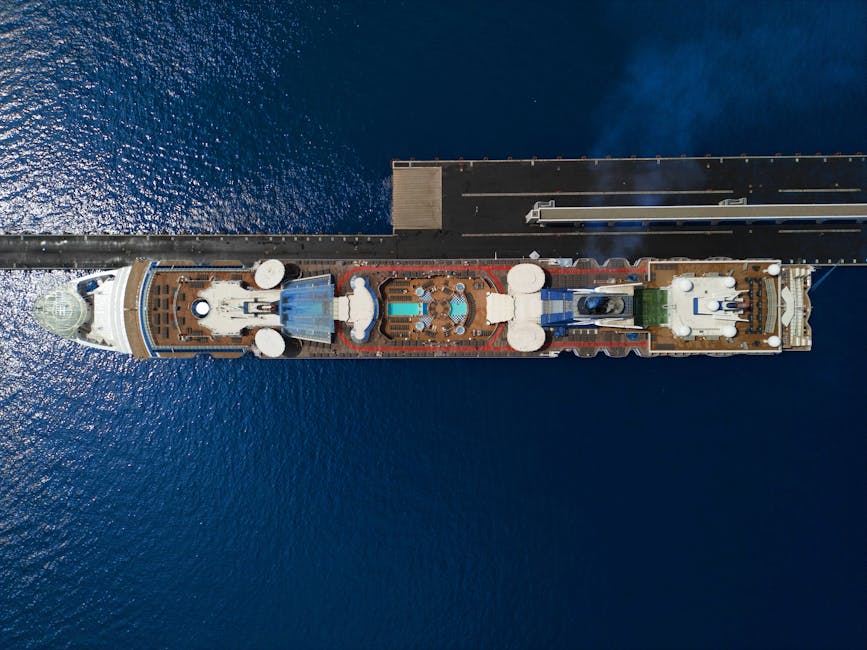
The most profound difference in the cruise ship vs Titanic debate isn’t the size, but the philosophy of safety. The Titanic was built under the British Board of Trade regulations of 1894, which hadn’t been updated to account for ships over 10,000 tons. Consequently, the Titanic was only required to carry enough lifeboats for 1,060 people, despite having a capacity of over 3,000. The logic was that the ship itself was its own lifeboat, and the boats were merely for ferrying passengers to a rescue ship in the event of a slow sinking. This catastrophic miscalculation led to the first International Convention for the Safety of Life at Sea (SOLAS) in 1914.
“The Titanic disaster was the catalyst for the most significant maritime safety regulations in history. Today, every passenger ship must carry enough lifeboats and liferafts for 125% of the total number of people on board.”
Modern ships like the Wonder of the Seas (approx. $1.35 billion) utilize partially enclosed lifeboats that are essentially small, motorized ships themselves. These boats are equipped with GPS, food, water, and medical supplies. A pro of these modern systems is that they can be launched even if the ship is listing up to 20 degrees, a scenario that made many of Titanic’s lifeboats unusable. A con, however, is that the sheer size of modern ships makes a full evacuation a logistical nightmare, requiring rigorous crew training and automated muster systems. Unlike the chaotic deck-side muster of 1912, modern passengers often check into their muster stations via a smartphone app before the ship even leaves the dock.
Technological Advances in Navigation
- Iceberg Detection: Titanic relied on human lookouts in a crow’s nest with no binoculars. Modern ships use high-frequency Doppler radar and thermal imaging to detect ice and debris miles away.
- Hull Integrity: Titanic used iron rivets that contained high levels of slag, which became brittle in freezing water. Modern ships use welded, high-tensile steel and double hulls.
- Watertight Compartments: Titanic’s bulkheads did not reach high enough, allowing water to spill from one to the next like an ice cube tray. Modern bulkheads are fully sealed and monitored by centralized computer systems.
- Stabilizers: Modern ships use computer-controlled fins that extend from the hull to reduce rolling in rough seas, a comfort feature that also prevents cargo and equipment from shifting dangerously.
- Propulsion: Titanic used a traditional rudder and three propellers. Modern ships use Azipod units—electric propulsion motors in pods that can rotate 360 degrees, allowing a ship the size of a skyscraper to turn on a dime without the help of tugboats.
The Wonder of the Seas also features advanced fire suppression systems, which are arguably more important than lifeboat capacity in the modern era. While the Titanic suffered a coal bunker fire that smoldered for days, it was the water that ultimately claimed her. Today, fire is the greatest threat to a cruise ship. Automated misting systems and fire-resistant zones ensure that a galley fire doesn’t become a vessel-wide catastrophe. The transition from manual coal-firing to automated diesel-electric or LNG (Liquefied Natural Gas) propulsion has also removed the most dangerous labor-intensive jobs from the ship’s bowels, significantly reducing the risk of industrial accidents on board.
The Evolution of Passenger Comfort and Social Hierarchy
When comparing the onboard experience of a modern cruise ship vs Titanic, we see a complete reversal of social dynamics. On the Titanic, the class system was rigid and legally enforced. Third-class passengers (steerage) were physically separated from First and Second class by gated barriers, partly due to immigration laws of the time which required the segregation of passengers to prevent the spread of disease. While First Class enjoyed the legendary Grand Staircase, a Parisian-style café, and a Turkish bath, Third Class shared just two bathtubs for over 700 people. The experience was one of exclusion.
In 2024, the “class” system has evolved into a tiered service model, often referred to as a “ship within a ship.” For example, the MSC World Europa (approx. $1.2 billion) features the MSC Yacht Club. This is a private area with its own pool, lounge, and butler service. The pro of this model is that it allows budget-conscious travelers to enjoy the ship’s main amenities while offering a high-end experience for those willing to pay. The con is that it can create a sense of “haves” and “have-nots,” though it is far less restrictive than the locked gates of 1912. Most of the ship’s 40+ restaurants and bars are accessible to everyone, a stark contrast to the Titanic where Third Class was restricted to a simple dining saloon with fixed meal times.
Dining and Amenities Comparison
The Titanic’s First Class menu was a marvel of the Edwardian era, featuring 11-course dinners with oysters, filet mignon, and pâté de foie gras. However, the food was prepared in coal-fired ovens and lacked the refrigeration technology we take for granted. Today, a ship like the Icon of the Seas manages a global supply chain that provides fresh sushi, Italian handmade pasta, and American steakhouse fare simultaneously. The variety is staggering, but some purists argue that the “soul” of maritime travel—the quiet connection to the sea—is lost in the noise of the 24-hour pizza parlors and robot bartenders.
Accommodations have also undergone a radical shift. In 1912, even a First Class cabin might lack a private bathroom. Today, it is nearly impossible to find a cabin on a major cruise line that isn’t an ensuite. The MSC World Europa offers “Infinite Verandas,” where the window slides down to create a balcony at the touch of a button. This level of climate-controlled, tech-integrated living would have been science fiction to a passenger in 1912. The Titanic’s cabins were heated by steam pipes and lit by early incandescent bulbs; modern suites feature high-speed Wi-Fi, 4K televisions, and smart lighting that adjusts based on the time of day.
Entertainment: From Ragtime to Broadway
The entertainment comparison is perhaps the most lopsided. The Titanic had a highly skilled eight-member band that played ragtime and waltzes. That was the extent of the organized “shows.” Modern megaships feature Broadway-style theaters with revolving stages, ice-skating rinks with professional performers, and aqua-theaters where divers plunge from 50-foot platforms. We have moved from a culture of self-entertainment and conversation to one of constant stimulation. This shift reflects the broader change in travel: the Titanic was a way to get somewhere; a modern cruise ship is the reason you left home in the first place.
Behind the Scenes: The Logistics of a Floating City
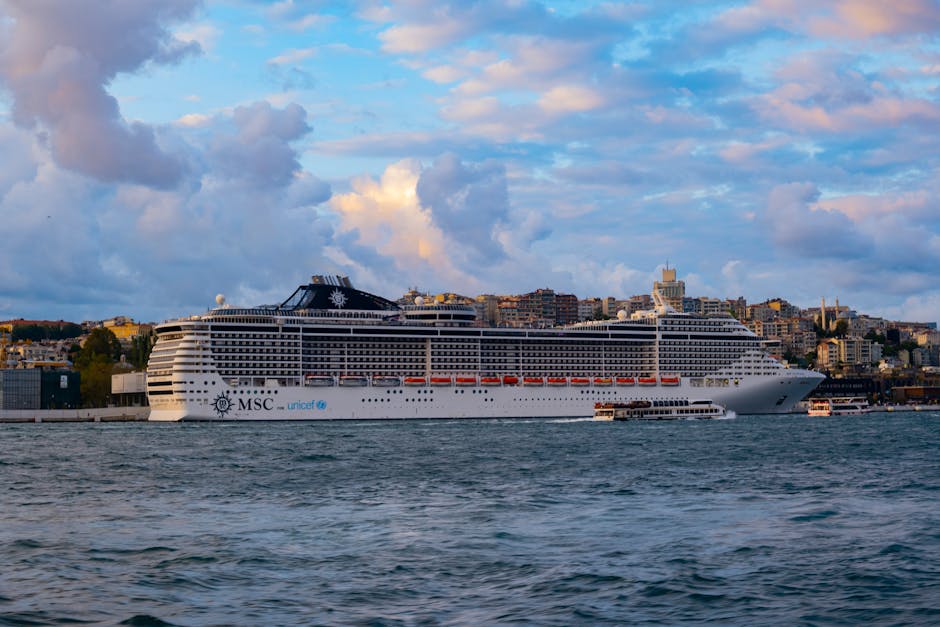
Maintaining a modern cruise ship is a feat of logistics that would baffle the crew of the Titanic. While the Titanic required over 600 tons of coal per day, which was shoveled by hand by a “Black Gang” of firemen working in sweltering heat, modern ships are powered by massive diesel-electric plants or Liquefied Natural Gas (LNG). The Icon of the Seas, for example, utilizes LNG to significantly reduce its carbon footprint. However, the sheer volume of supplies required is immense. A typical week-long voyage on a modern megaship requires approximately 60,000 eggs, 15,000 pounds of beef, and 700 pounds of ice cream.
Maintenance is also a constant process. Unlike the Titanic, which was expected to stay in service for decades with minor repairs, modern ships undergo a mandatory “dry-docking” every two to five years. During this time, the ship is lifted out of the water, the hull is scraped of barnacles to improve fuel efficiency, and the interiors are often completely renovated. The cost of a major dry-docking can exceed $100 million, a figure that highlights the massive financial stakes involved in modern maritime travel.
Common Mistakes When Choosing a Modern Cruise
- Underestimating the Size: Many travelers book the largest ship thinking it offers the most, but they don’t realize they may walk 5-10 miles a day just navigating the decks.
- Assuming All-Inclusive: Unlike the Titanic, where your ticket covered almost everything within your class, modern cruises have “specialty dining” and “add-on” experiences that can double the cost of your trip if you aren’t careful.
- Ignoring the Itinerary: Because modern ships are “destinations” themselves, some travelers forget to check if the ship can actually dock at the ports they want to see. Large ships often have to anchor far offshore, requiring “tenders” (small boats) to reach land.
The Environmental Impact: Coal vs. LNG
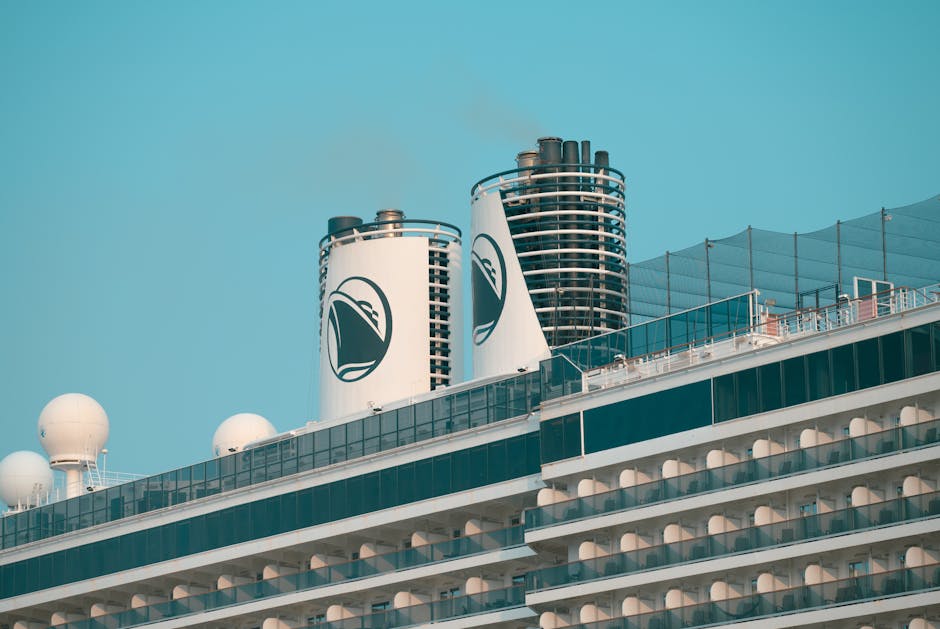
The environmental footprint of the Titanic was localized but dirty. The thick black smoke from its funnels was a point of pride in 1912, signaling power and speed. Today, that same smoke would result in massive fines and international condemnation. Modern cruise lines are under intense pressure to reduce emissions. The shift to LNG (Liquefied Natural Gas) is a major step, as it eliminates sulfur emissions and reduces nitrogen oxides by 85%. Furthermore, modern ships use advanced wastewater treatment systems that produce effluent cleaner than most municipal tap water, a far cry from the direct-to-ocean disposal methods of the early 20th century.
Ultimately, the comparison between a modern cruise ship vs Titanic reveals that while we have conquered the physical limitations of the sea through size and technology, the core human desire remains the same. Whether it was a First Class passenger in a silk gown or a modern traveler in a swimsuit, the draw of the horizon and the mystery of the deep ocean continue to pull us toward the shipyard. We are simply much safer—and much more crowded—than we were a century ago. The Titanic remains a haunting reminder of human fallibility, while the modern cruise ship is a testament to our ability to learn, adapt, and build cities that can float on the very water that once claimed the “unsinkable” ship.

Family Vacation Deals 2026: Build a Cheaper Trip

Bofa Travel Rewards Reddit: Bank of America Travel Rewards: What Reddit Actually Says (And What They Miss)

Camping Gear for Kauai: What the Climate Actually Demands
About The Author
