
Train Travel to Europe From the UK: 7 Smarter Routes
At 6:30 in the morning, you can be standing in a crowded airport queue, still waiting for security, while your city-centre train to Paris has already left London. The common misconception is that flying is always faster and cheaper. For short European trips, the real comparison includes airport transfers, early check-in, security queues, passport control, and the time spent reaching the city after landing. Train travel from the UK works best when you choose the right destination, protect your connections, and treat border checks as part of the journey.
Is train travel to Europe from the UK really slower?
Verdict: For Paris, Brussels, Lille, Rotterdam, and Amsterdam, rail is often the simpler door-to-door choice from London.
The flight clock starts before takeoff
A two-hour flight is not a two-hour trip. Add the journey to the airport, the airline check-in deadline, security, boarding, baggage collection, and the transfer into town. A passenger leaving central London for a short European break may spend five or six hours moving between transport steps. That is before delays or a checked bag enter the picture.
A train journey has fewer separate handovers. You reach St Pancras International, complete security and passport checks, board once, and arrive at a central station. The train may show a longer headline time than the flight, but the complete journey is often easier to predict.
City-centre arrivals change the maths
Paris Nord, Brussels-Midi, Rotterdam Centraal, and Amsterdam Centraal place you close to hotels, museums, restaurants, and local transport. You do not need a second airport transfer after landing. That matters most on a weekend, when every extra hour spent in a taxi or airport bus cuts into the trip.
Rail is not automatically the best choice. A remote European destination may require several changes, and a cheap flight can win on price. The strongest rail case is a direct journey to a central station or a single protected connection.
What documents do UK travellers need for Europe by train?
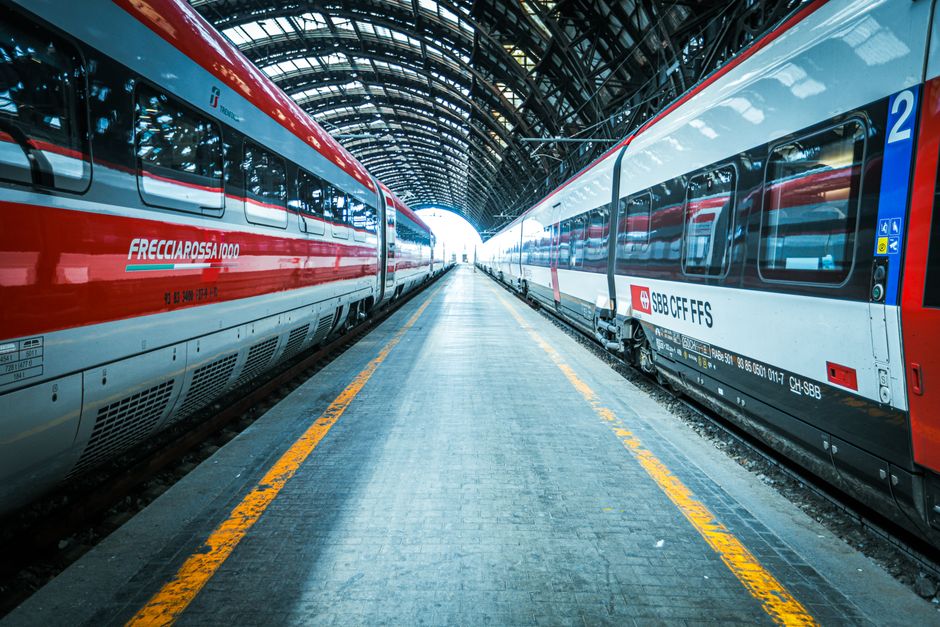
Verdict: Check passport validity and the 90-day rule before buying a non-refundable ticket.
Does a British passport need a visa?
British citizens can normally visit Schengen countries without a visa for tourism for up to 90 days in any rolling 180-day period. The limit applies to the whole Schengen area, not each country. A week in France, Belgium, and the Netherlands uses seven days from the same allowance.
Your passport should have an issue date less than 10 years before the day you enter and at least three months left after the day you plan to leave the Schengen area. Passport cards do not replace a passport for this journey. Travellers with another nationality, a residence permit, or plans to work or study need to check the destination’s own rules.
What happens at the border?
On trains leaving London, passport control and security happen before boarding. Allow the arrival time shown on your ticket. Do not plan to walk into the station minutes before departure. In 2026, the EU Entry/Exit System can also require non-EU visitors to register a face image and fingerprints at the external Schengen border. The process may add queues, especially during busy holiday periods.
ETIAS is expected to begin in the last quarter of 2026 for eligible visa-free visitors, but it is not a visa and it is not currently operating. Check the UK government Schengen guidance and the official ETIAS website close to departure.
Which European train routes from the UK make the most sense?
Verdict: Pick the destination that matches your available time, then build the itinerary around the fewest changes.
The fastest gateway choices
Eurostar is the main high-speed gateway from London. Its published fastest times are useful planning benchmarks, although timetables change and a specific departure may take longer.
| Route | Main service | Fastest published time | Best use |
|---|---|---|---|
| London to Paris | Eurostar | 2 hours 16 minutes | First city break |
| London to Brussels | Eurostar | 1 hour 53 minutes | Belgium or Germany connections |
| London to Rotterdam | Eurostar | 3 hours 13 minutes | Compact Netherlands trip |
| London to Amsterdam | Eurostar | 3 hours 52 minutes | Direct weekend journey |
| Paris to Lyon | TGV INOUI | About 2 hours | Southern France |
| Brussels to Cologne | Deutsche Bahn ICE | About 1 hour 50 minutes | Germany onward |
How far the network extends
Paris is the strongest starting point for France because TGV INOUI connects the capital with Lyon, Marseille, Bordeaux, and other regions. Brussels is better for a northbound route into the Netherlands or Germany. Amsterdam works well when you want a direct ride and do not want to change in Paris.
Use the current Eurostar route information as a starting point, then check the onward operator before paying. The best route is the one with a reliable connection and a sensible arrival time, not just the shortest number shown in a search result.
How should you book a train trip from the UK?
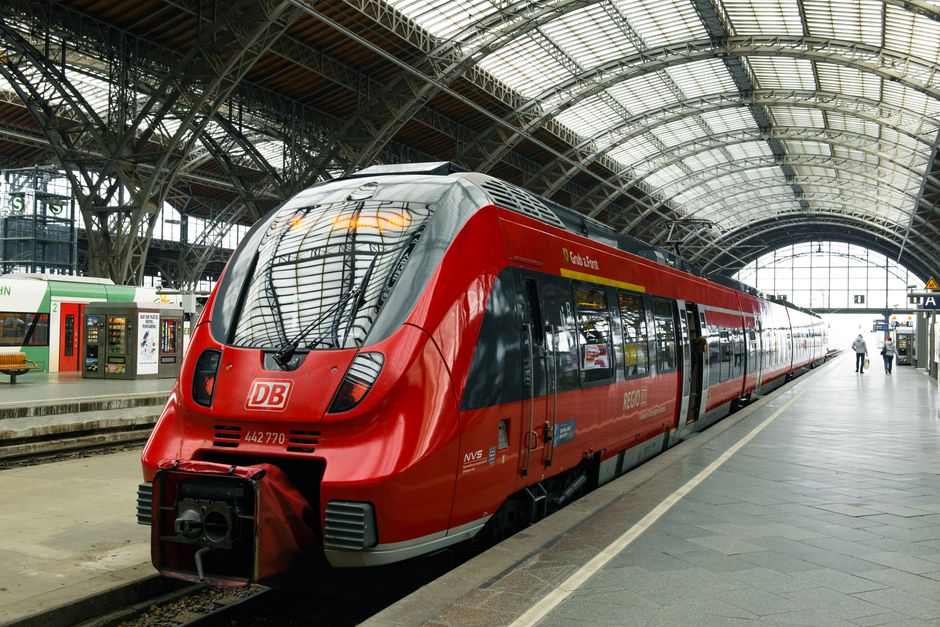
Verdict: Book the complete journey around connection safety, not the cheapest first leg.
Use this five-part booking test
- Start with the arrival city. Choose Paris Nord, Brussels-Midi, Amsterdam Centraal, or another central station before searching for fares.
- Check the full itinerary. Search London to the final destination, not only London to Paris. This reveals transfer times and the actual arrival hour.
- Protect the connection. A through-ticket or one booking is safer than two unrelated tickets. If the first operator delays you, a protected booking gives you a stronger route to the next available train.
- Allow for Paris station changes. Eurostar reaches Paris Nord. Many TGV INOUI services leave from Gare de Lyon, Gare de l’Est, or Montparnasse. Allow at least 75 minutes between stations, and more with children or large luggage.
- Read the fare conditions. The lowest fare may be fixed, non-refundable, or expensive to change. A flexible ticket can be worth more than a small saving on a long trip.
Where to compare operators
Use the Eurostar booking system for the Channel crossing, SNCF Connect for French TGV INOUI routes, and Deutsche Bahn for ICE journeys in Germany. Rail Europe can help compare several operators, but check the final ticket for the operator, train number, seat reservation, and change rules. A booking screen that shows one price does not always mean every segment has the same protection.
What can go wrong on the day of travel?
Verdict: Most rail problems come from tight connections, wrong stations, or missed border time rather than the train ride itself.
The Paris transfer is the main trap
Paris has several major stations, and they are not connected by one simple international concourse. You may arrive at Gare du Nord, walk to the Metro or a taxi rank, cross the city, pass through a busy station, and find a platform for a train leaving from another building. A 35-minute connection looks fine on a timetable but can fail after a small delay.
For a separate Eurostar and TGV ticket, build in 90 minutes or more. With luggage, a child, or a peak-time arrival, two hours is the safer choice. If the onward train is sold out or the fare is fixed, missing it can mean buying a new ticket.
Delays, luggage, and border queues
Arrive at St Pancras with your ticket downloaded and your passport easy to reach. Security and passport checks take place before boarding, so a delay getting through the station can be more serious than a delay on the platform. Keep medication, chargers, water, and one warm layer in a small day bag rather than buried inside a suitcase.
Onward European trains often have overhead racks and luggage areas, but you still need to lift and move your own bags between stations. A large case makes the Paris transfer slower. Pack one rolling case and one small backpack if possible. If you are carrying a bicycle, sports equipment, or oversized luggage, check the operator’s rules before buying.
Three mistakes to remove from the plan
- Do not book a 20-minute Paris connection because the timetable allows it.
- Do not assume a low fare can be changed after a missed connection.
- Do not treat the 90-day Schengen allowance as 90 days per country.
These small checks turn train travel from the UK into a calm journey instead of a chain of rushed decisions.
When is an Interrail pass better than separate tickets?
Verdict: Buy point-to-point tickets for one or two fixed journeys; choose an Interrail Global Pass when flexibility has real value.
When Interrail wins
The Interrail Global Pass can cover travel across multiple countries, with options such as four travel days within one month. It suits a route such as London, Brussels, Cologne, Amsterdam, and Paris when you may change the order or add a city. You still need reservations on busy high-speed services, including Eurostar, and those reservations cost extra.
The pass is also useful when you want to decide tomorrow’s destination tomorrow. That freedom has a price, so compare the pass cost, reservation fees, and number of actual travel days before buying.
When separate tickets win
Separate advance tickets are usually the better choice for a fixed return to Paris, Brussels, or Amsterdam. You can select the exact train, compare flexible fares, and avoid paying for unused pass days. They also work well for travellers who prefer a hotel base and only one or two day trips.
Do not buy a rail pass simply because the itinerary contains several countries. If you spend four nights in one city and take only two long train rides, point-to-point tickets are the clearer choice. The pass becomes attractive when flexibility prevents several expensive last-minute bookings.
Which UK-to-Europe rail itinerary should you choose?
Verdict: For a first trip, choose Paris; for a multi-city trip, start in Brussels and move east or north.
My pick for a first European train trip
Book a direct London to Paris service for a two- or three-night break. The journey is short, the arrival station is central, and the city offers enough museums, food, and neighbourhoods for a full weekend without another train. Add Lyon or Reims only if you have at least one extra night and a protected connection.
My pick for a longer route
Use London to Brussels as the opening leg for a longer itinerary. Brussels connects naturally with Amsterdam, Cologne, and other European cities, so the route can grow without forcing a long backtrack through Paris. For four or more travel days across several countries, compare an Interrail Global Pass with individual tickets; for a fixed weekend, keep the simple direct Eurostar booking.
The single most important rule is simple: choose a direct city-centre route first, then leave enough time for borders and connections.

Travel Europe Under $50 A Day: Europe on $50 a Day in 2026: My Exact System

Best Time to Visit Europe for Better Weather and Fewer Crowds

All Inclusive Resort Europe: 7 All-Inclusive Resorts in Europe Worth the Price
About The Author
