
Alps Ski Resorts Advanced Skiers: 7 Alps Ski Resorts That Deliver for Advanced Skiers in 2026
Most ski resorts in the Alps claim to have expert terrain. The marketing shows a steep couloir, uses words like “freeride paradise,” and then you arrive to find three black runs any confident intermediate handles without trouble. Advanced skiers — people who want genuine off-piste access, serious vertical, and terrain that demands respect — need a different filter.
These seven resorts pass that filter.
The 7 Resorts at a Glance: Numbers That Actually Matter
Slope ratings across different countries are not standardized. An Austrian black run and a French black run can feel completely different. The metrics that matter for expert skiers: top elevation, total vertical drop, and whether off-piste is genuinely accessible or guide-required only.
| Resort | Country | Top Elevation | Vertical Drop | Skiable km | Off-Piste Access | Best For |
|---|---|---|---|---|---|---|
| Verbier | Switzerland | 3,300m | ~2,200m | 410km (4 Vallées) | Exceptional — multiple freeride zones | Freeride specialists |
| Chamonix | France | 3,842m | 2,807m | ~170km | Serious — guide strongly recommended | Extreme terrain, Vallée Blanche |
| Val d’Isère / Tignes | France | 3,456m | ~2,100m | 300km | Very good, no guide required | Big mountain variety |
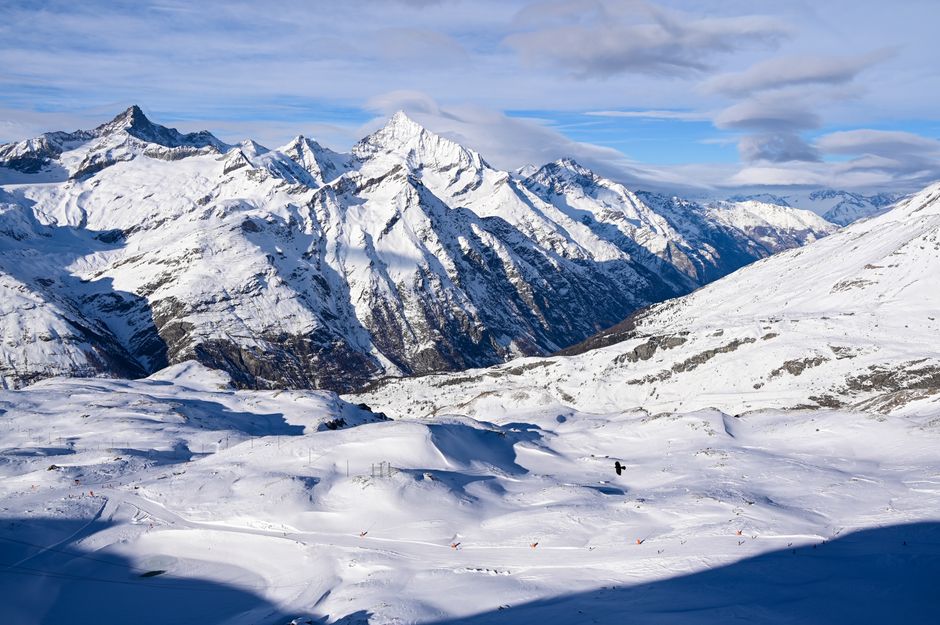
| Zermatt | Switzerland | 3,883m | ~2,200m | 360km | Very good at altitude | Late season, glacier skiing |
| St. Anton am Arlberg | Austria | 2,811m | ~1,700m | 305km (Arlberg area) | Excellent — Valluga, Schindlergrat | Powder and off-piste culture |
| Courmayeur | Italy | 2,755m | ~1,200m | ~100km | Good — Cresta d’Arp ridge | Quiet, uncrowded, Italian atmosphere |
| Les Arcs / Paradiski | France | 3,226m | ~2,000m | 425km | Very good — Aiguille Rouge | Big vertical, underrated by experts |
One number stands out: Chamonix’s Vallée Blanche runs 20km at 2,807m of vertical. No other resort in the Alps comes close for a single descent. That said, Chamonix’s lift-served terrain is modest — 170km feels thin against Verbier’s 410km. The two resorts serve completely different purposes and attract different types of expert skier.
Three Resorts Where Expert Skiers Keep Coming Back
Seven resorts made this list. Three of them are where the most experienced skiers return season after season. Here is the honest breakdown.
Verbier: The Freeride Capital With Real Consequences
Verbier hosts the Freeride World Tour for a reason. The main expert terrain — Vallon d’Arbi, Lac des Vaux, Stairway to Heaven off Mont Fort at 3,300m — does not appear on any piste map. You need to know the mountain or hire a guide. The 4 Vallées lift pass covers 410km and links four resorts, but most serious skiers barely leave Verbier’s immediate terrain. The Jumbo gondola upgrade now runs at 2,400 people per hour, so the powder-morning queues that used to ruin a fresh snowfall are mostly gone outside of peak holiday weeks. One honest caveat: Verbier is expensive. A chalet week during February half-term runs £3,000–£6,000 per person. January and March offer the same mountain at significantly lower cost.
Chamonix: Not a Resort — A Mountain Range
Chamonix is different from every other entry on this list. It is a town at the base of Mont Blanc (4,808m) with several disconnected lift systems — Grands Montets, Brévent, Flégère, Les Houches — each covering a different face of the valley. Grands Montets (top station 3,300m) is where advanced skiers spend most of their time. Off-piste from Grands Montets is serious: avalanche transceiver, probe, and shovel are mandatory, not optional. The Vallée Blanche descent from the Aiguille du Midi (3,842m) takes 3–5 hours including the arête walk and is the single best ski experience in the Alps for the right skier. Chamonix suits skiers who are comfortable with alpinism basics and do not mind that lift-served terrain is genuinely limited. If you want ski area coverage, go elsewhere. If you want the most serious mountain environment in the Western Alps, Chamonix is the answer.
St. Anton: Austria’s Answer to Everything
St. Anton sits at 1,304m but the Valluga summit reaches 2,811m. The Arlberg area — including Lech, Zürs, and Stuben — covers 305km and has been fully interconnected since 2016. The off-piste culture here runs deep. The Valluga summit legally requires a guide unless you are skiing across to Lech. But the Schindlergrat and Rendl areas offer serious terrain accessible without a guide for skiers who understand snow conditions. North-facing aspects mean St. Anton holds powder longer than most French resorts at comparable elevation. A deep powder day off Rendl is worth rescheduling flights for.
What Difficult Terrain Actually Means on a Ski Map
Resort marketing conflates difficulty ratings constantly. The European black diamond indicates gradient, not condition. A groomed black run at Val d’Isère on a clear Tuesday is hard work but technically manageable for any strong intermediate skier. What actually separates expert terrain is more specific:
- Off-piste access without mandatory guides — some resorts legally require guides for their best terrain. Others like Val d’Isère’s Col Pers zone are accessible to any skier who understands avalanche risk.
- Variable snow conditions — powder, windpack, breakable crust, and refrozen spring snow each require different technique. Resorts above 2,500m with north-facing aspects maintain more varied natural snow.
- Consequence terrain — cliff exposure, mandatory air, and narrow couloirs are rare on marked pistes but common in the off-piste zones of Chamonix, Verbier, and Zermatt’s Stockhorn area.
- Sustained vertical — a 700m descent on black runs is fundamentally different from 200m. Total vertical drop matters more than top elevation alone.
Val d’Isère’s Face de Bellevarde — the 1992 Olympic downhill course — is the most honest benchmark for groomed expert terrain in the Alps. If that run gives you serious trouble, the off-piste zones on this list will be genuinely dangerous, not just challenging.
The Underrated Pick: Les Arcs and the Aiguille Rouge
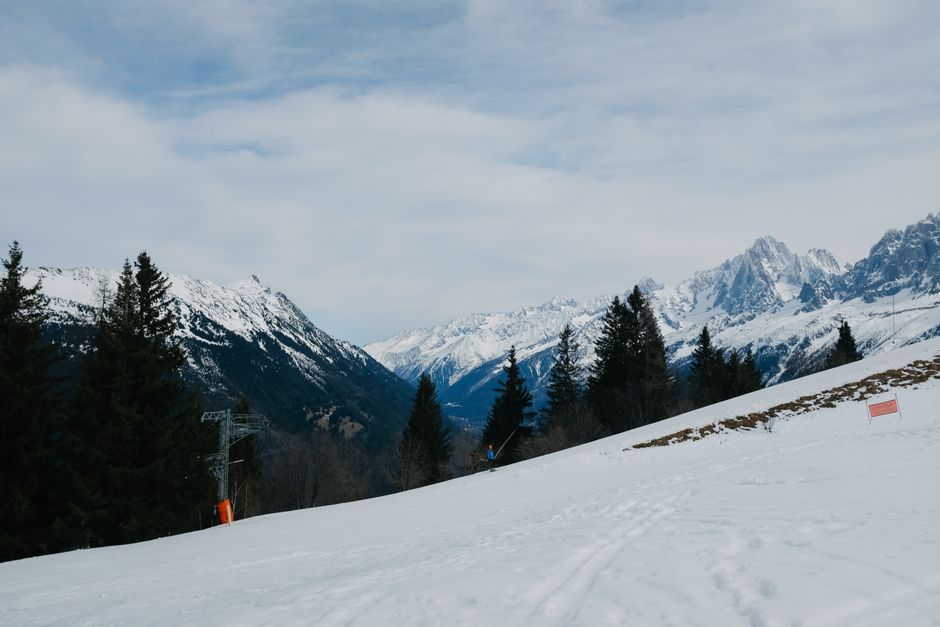
Les Arcs does not get talked about the way Verbier or Chamonix does. The Aiguille Rouge (3,226m) offers close to 2,000m of vertical in a single descent — one of the longest in the Alps. The off-piste from Aiguille Rouge into the Grand Couloir and toward Bourg-Saint-Maurice is legitimate expert terrain that most of the resort’s visitors never touch. The Paradiski link to La Plagne covers 425km total. Lift queues on powder days run noticeably shorter than at Verbier or Chamonix. Accommodation prices are 20–30% lower than the Swiss resorts. If you want serious vertical and legitimate off-piste without fighting brand-name crowds, Les Arcs rewards the choice.
Three Mistakes Advanced Skiers Make Choosing a Resort
Optimizing for Après-Ski Over Snow Quality
St. Anton’s après-ski is famous — the Mooserwirt and Krazy Kanguruh bars fill fast from 3pm onward. But the village base sits at 1,304m, and warm spells in February can strip the lower mountain fast. Verbier (1,500m base) and Val d’Isère (1,850m base) hold snow better in an unreliable winter. If snow reliability is the priority, base elevation matters more than nightlife reputation.
Booking February Without Checking School Holiday Dates
UK half-term, French Vacances Scolaires, and Swiss winter break all land in different February weeks. During those specific weeks, Verbier and Chamonix see 2–3 hour lift queues on powder days. The same mountain two weeks earlier or later is a different experience entirely. Check the exact 2026 dates before committing.
Treating Off-Piste as a Marketing Term
Every resort on this list has terrain where people die every season. The Col du Chardonnet approach from Grands Montets, Verbier’s Mont Fort back bowls, and the Valluga descent in St. Anton all have documented avalanche fatalities in their history. An AIARE Level 1 avalanche course and working knowledge of snowpack assessment are prerequisites for the best terrain here — not optional additions.
When Each Resort Peaks for Expert Conditions
| Resort | Peak Powder Window | Best Late-Season Option | Avoid |
|---|---|---|---|
| Verbier | January – early February | March (Mont Fort glacier) | February half-term (queues) |
| Chamonix | January – February | April (Vallée Blanche spring conditions) | December (thin snowpack) |
| Val d’Isère / Tignes | Late December – January | April (Grande Motte glacier open) | Late February school holidays |
| Zermatt | January – February | May (Klein Matterhorn, 3,883m) | December (expensive, thin lower mountain) |
| St. Anton | January – February | March (north-facing aspects hold late powder) | Late February holiday surge |
| Courmayeur | January – February | March (quieter than French resorts) | Christmas week (overpriced) |
| Les Arcs | January – February | March (Aiguille Rouge holds late snow well) | February school holidays |
Zermatt is the outlier. The Klein Matterhorn glacier at 3,883m stays open into May and sometimes June — the highest lift-served terrain in the Alps. For skiers who want to extend the season well past what French or Austrian resorts offer, Zermatt in April on firm spring snow over glaciated terrain is a separate trip worth planning on its own merits. The Alps are warming, and lower-altitude resorts increasingly depend on snowmaking below 1,500m. Every resort on this list sits high enough to absorb a warm year better than average. The skiers who will keep finding what they are looking for are the ones chasing altitude and terrain rather than brand recognition.


About The Author
