
Bangkok Street Food: A First-Timer’s Guide to the Food Markets
I remember my first trip to Bangkok. I was starving, jet-lagged, and standing on Khao San Road surrounded by neon signs and menus printed in four languages. Everything looked safe. Everything tasted like regret.
Three trips later, I learned the hard way that eating well in Bangkok isn’t about avoiding street food. It’s about knowing which street, which stall, and which dish. Here’s what I wish someone told me before I wasted money on a sad pad thai served by a guy who clearly hated his job.
Where to Eat: The Markets That Actually Deliver
Not all markets are equal. The tourist-heavy ones like Khao San Market or Asiatique serve reheated versions of Thai classics designed for Western palates. They’re not bad. They’re just not real.
Here’s where I send friends now:
- Yaowarat Road (Chinatown) — Go after 6 PM. The entire street turns into a food market. Best for seafood (grilled river prawns, oyster omelets) and Chinese-Thai fusion. The roasted duck at Nai Ek Roll Noodle is worth the queue.
- Or Tor Kor Market — Near Chatuchak. This is a fresh produce market with a cooked food section. It’s clean, organized, and the fruit is incredible. Try the mango sticky rice from stall #8. It beats any dessert I’ve had in a restaurant.
- Wang Lang Market — Across the river from Thonburi. Almost no tourists. Student prices. The khao man gai (chicken rice) here costs 40 baht and tastes better than the 200 baht version at a food court.
- Khlong Toei Market — Not for the faint of heart. It’s a working wholesale market. Go early (6 AM) for the best kway teow reua (boat noodles) I’ve ever had. Be prepared for strong smells and raw meat on display.
Verdict: If you only visit one market, make it Yaowarat at night. Bring cash. Bring an empty stomach.
How to Spot a Good Stall (Before You Get Sick)
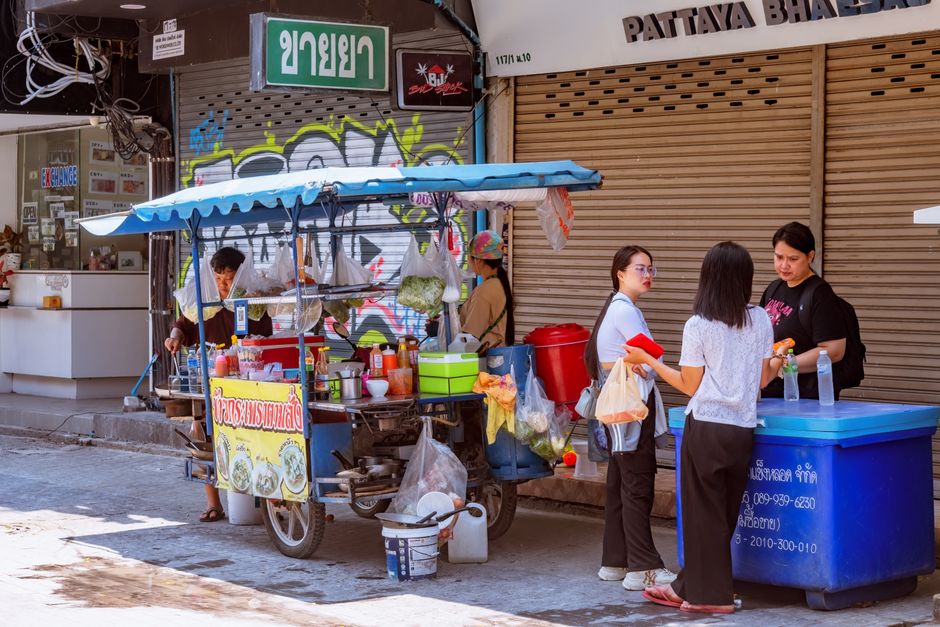
This is the question everyone asks: “How do I know the food is safe?”
I’ve eaten at over 50 street stalls in Bangkok. I’ve gotten sick exactly once — from a stall that had a laminated menu, a credit card machine, and a guy wearing gloves. The gloves were a red flag.
Here’s what actually matters:
- Look at the queue. Locals eating there = good sign. If there’s a line of Thai office workers at 1 PM, that stall is safe.
- Watch how they cook. The wok should be screaming hot. Oil should be bubbling. If they’re reheating pre-cooked meat in a microwave, walk away.
- Check the raw ingredients. Fresh herbs should look bright, not wilted. Meat should be on ice or cooked immediately. If the chicken has been sitting out for an hour in the sun, skip it.
- Look at the utensils. Are they using the same tongs for raw and cooked food? If yes, leave. A good stall will have separate tools.
- Trust your nose. If the area smells sour or rotten, that’s not the food — that’s the drainage. Move to a different block.
One hard rule: Never eat from a stall that has flies landing on the food. Flies don’t care about your stomach. They carry bacteria from the drain to your pad thai.
What to Order: The First-Timer’s Survival Menu
You don’t need to order the weirdest thing on the menu to have an authentic experience. Stick to these five dishes. They’re forgiving, they’re delicious, and they won’t wreck your digestion.
| Dish | Thai Name | What to Look For | Typical Price |
|---|---|---|---|
| Pad Thai | ผัดไทย | Fresh noodles, tamarind tang, not too sweet. Avoid orange-colored versions (that’s ketchup). | 40-60 baht |
| Som Tum (Papaya Salad) | ส้มตำ | Ask for Thai style (not the sweet version). It should be spicy, sour, and crunchy. | 30-50 baht |
| Moo Ping (Grilled Pork Skewers) | หมูปิ้ง | Look for caramelized edges. The marinade should be sticky, not watery. | 10-20 baht per skewer |
| Khao Man Gai | ข้าวมันไก่ | Poached chicken on rice with ginger sauce. The rice should be fragrant from chicken fat. | 40-60 baht |
| Tom Yum Goong | ต้มยำกุ้ง | Clear broth, not creamy. The creamy version is for tourists. Real tom yum is sour and spicy with whole prawns. | 80-120 baht |
Pro tip: Always say mai phet (not spicy) if you’re sensitive. Thai spicy is not the same as “medium” at your local Thai restaurant at home.
The Biggest Mistake Tourists Make (And How to Avoid It)
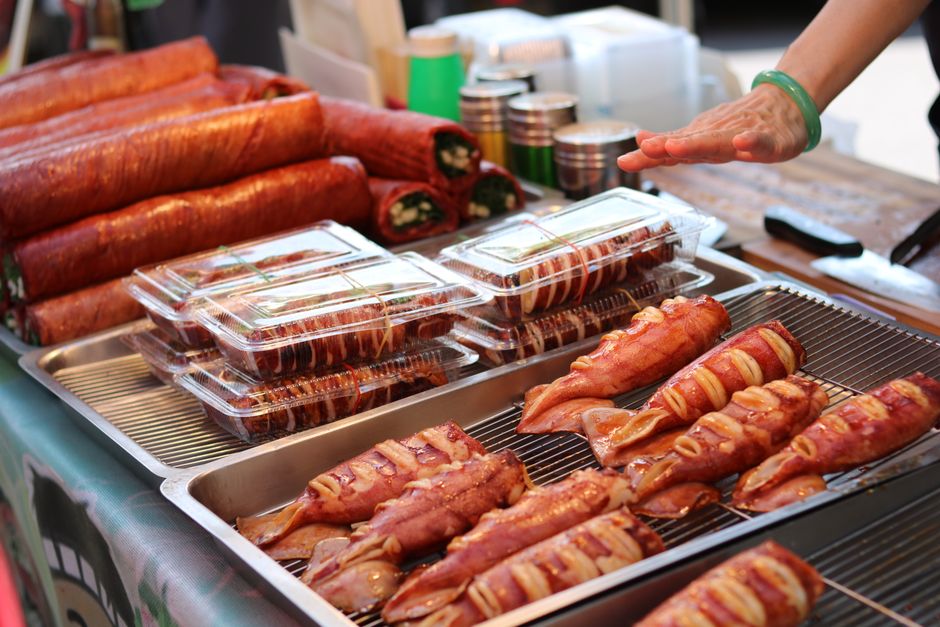
I see it every time. A tourist walks up to a stall, points at the picture menu, and says “one of those.” The seller smiles, hands over a plate, and charges triple the price.
The mistake: Not knowing the price before you order. Street food in Bangkok is cheap, but some stalls near tourist attractions will charge 200 baht for a dish that costs 40 baht at a local market.
Here’s how to avoid getting ripped off:
- Look for a price board. If there’s no written menu with prices, ask before you order. Say “Tao rai?” (how much?).
- If the price seems high, negotiate. Not aggressively — just say “Pheng pai” (too expensive) and walk. They’ll often lower the price.
- Carry small bills. If you hand over a 1000 baht note for a 50 baht meal, the seller might “not have change” and give you less.
- Skip the “set” (set meal) options at tourist stalls. They’re overpriced and usually include a watery soup and a sad spring roll.
When NOT to eat street food: If you have a compromised immune system, are pregnant, or have a severe food allergy, street food carries real risk. Stick to restaurant kitchens where you can see the hygiene certificate. Or hit Or Tor Kor Market — it’s the cleanest market in Bangkok and the food is just as good.
Drinks, Desserts, and the Final Bite
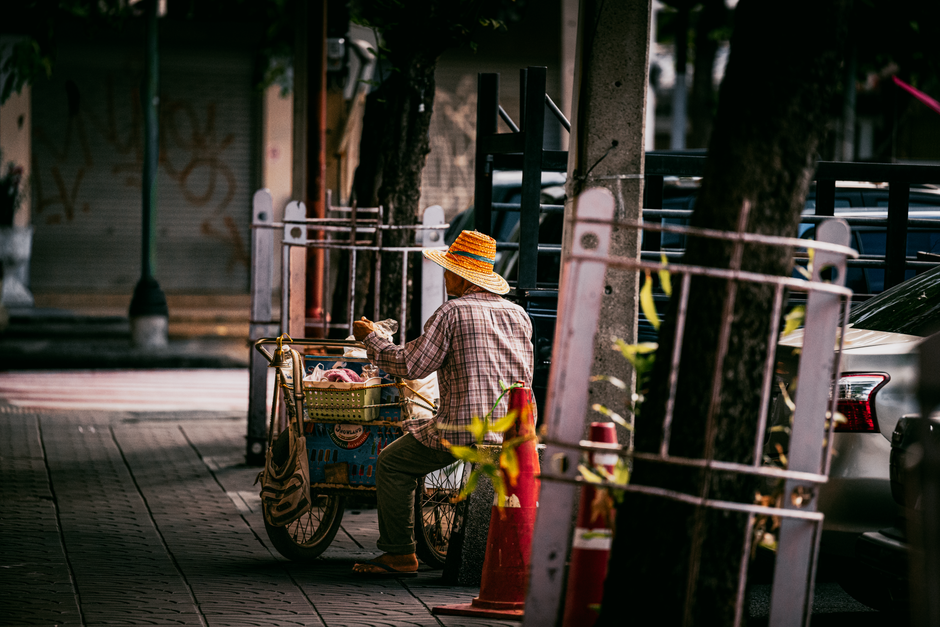
You’ve eaten your weight in noodles. Now what?
Don’t reach for a bottle of water from the stall. They’ll charge you 20 baht for a small bottle. Walk 20 meters to a 7-Eleven and get a 1.5-liter bottle for 14 baht. Same water, half the price.
For drinks on the street:
- Cha Yen (Thai iced tea) — Get it from a stall that uses fresh tea leaves, not powder. You’ll see them pouring the tea through a cloth filter. That’s the good stuff.
- Nam Manao (lime juice) — Ask for mai waan (not sweet) if you want it tart. It’s the best refreshing drink on a hot day.
- Coconut water — Fresh from the coconut, not from a carton. The vendor will hack it open in front of you. That’s how you know it’s real.
For dessert:
- Khao Niew Mamuang (mango sticky rice) — Only eat this when mangoes are in season (April to June). Out of season, the mangoes are sour and fibrous. Wait for the real thing.
- Roti Sai Mai (cotton candy roti) — A thin crepe wrapped around a cloud of cotton candy. It’s absurd and delicious. Best found at Wang Lang Market.
- I Tim Kati (coconut ice cream) — Served in a coconut shell. Look for the stall that has a hand-cranked ice cream machine. The texture is different — creamier, less icy.
I stood on Yaowarat Road my first night, overwhelmed by the noise and the smells, clutching a bottle of water I paid too much for. I didn’t know where to start. Now I know: start at the stall with the longest queue of Thai people. Order the dish that looks like it’s been made a thousand times. Eat it standing up, with your hands, while the oil from the wok still sizzles. That’s the Bangkok I keep coming back to.

Chiang Mai in January: A Five-Day Cool-Season Itinerary
Kyoto Travel Guide 2026: A 4-Day Culture Itinerary
Kyoto Travel Guide 2026: A Four-Day Cultural Itinerary
About The Author
