
Vietnam in February: What Travelling During Tet Is Really Like
Vietnam in February can deliver cool northern mornings, dry southern beaches and one of Asia’s most vivid cultural celebrations. It can also bring sold-out transport, altered opening hours and higher prices when Tet arrives.
When does Tet fall in February 2026, and how disruptive is it?
The dates that matter
Tet, Vietnam’s Lunar New Year, begins on Tuesday, February 17, 2026. The official public-sector holiday runs from Saturday, February 14, through Sunday, February 22, although private businesses may choose different schedules. The Vietnam government holiday announcement gives the clearest planning baseline, while the first three days of Tet, February 17 to 19, are the most sensitive for family visits, temple trips and local transport.
A practical timing chart
| Period | What travelers usually see | Booking verdict |
|---|---|---|
| February 1–10 | Preparations begin, flower markets grow busy and normal sightseeing remains widely available. | Strong choice for a smoother trip. |
| February 11–16 | People travel home, airports and bus stations become crowded, and prices can rise. | Book every long-distance leg early. |
| February 17–19 | Family celebrations dominate; some restaurants, museums and shops close or shorten hours. | Travel only with a flexible plan. |
| February 20–22 | Services reopen gradually, but return traffic remains heavy. | Keep extra time for transfers. |
| After February 22 | Most tourist services return to a more predictable rhythm. | Best balance of culture and convenience. |
Tet does not shut down the whole country. Major airports, large hotels and many restaurants still operate, but a published opening time is not a guarantee during a family holiday. My verdict: arrive before February 11 or travel after February 22 if you want a dependable itinerary.
Should you travel before, during, or after Tet?
The clearest choice
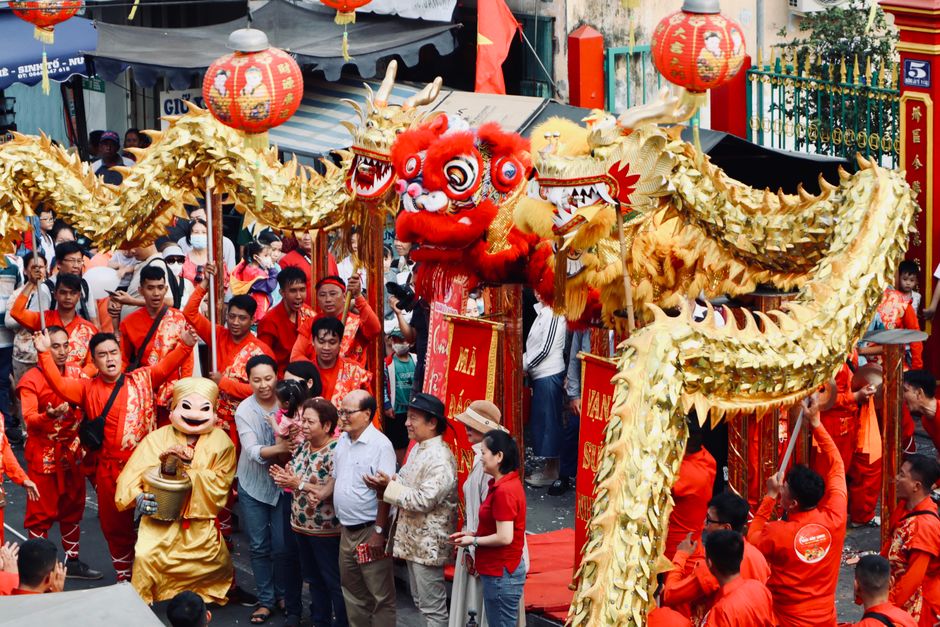
For most first-time visitors, the best window is February 1–10 or February 23 onward. These dates preserve February’s pleasant weather and give you more reliable access to trains, domestic flights, attractions and restaurants, while travelers who want the cultural heart of Tet should choose February 17–19 and accept that convenience will drop.
When the crowded window is worth it
Traveling during the holiday makes sense if you want to see family altars, peach blossoms in the north, yellow apricot blossoms in the south and quieter city streets on the first morning of the new year. It does not make sense if your trip depends on same-day bus tickets, spontaneous hotel changes or a tightly timed multi-city route. A short Tet stay in one base, such as Hanoi, Hoi An or Ho Chi Minh City, beats crossing the country while millions of residents are moving in the opposite direction. The concrete verdict is simple: choose Tet for atmosphere, not efficiency.
How do you build a Tet-proof route across Vietnam?
Match the route to February weather
Vietnam stretches across several climate zones, so February does not feel the same everywhere. Hanoi commonly sees cool conditions around 15–22°C, with damp mornings and occasional fog. Sapa can feel much colder, especially after sunset. Central Vietnam, including Da Nang and Hoi An, is often mild at roughly 20–26°C, but rain can still appear. Ho Chi Minh City and the Mekong Delta are warmer and usually drier, with daytime temperatures often reaching 30–33°C. Pack layers for the north, a light waterproof shell for the center and breathable clothing for the south.
Use a route with one flexible hinge
Build around one region instead of trying to cover the entire country in a week. A Hanoi–Ninh Binh–Ha Long route works well before Tet, while a Hoi An–Da Nang–Hue route gives you culture and short transfers in central Vietnam. In the south, Ho Chi Minh City pairs naturally with the Mekong Delta or Phu Quoc. Keep one uncommitted day before an international flight. Fog, holiday traffic and delayed domestic aircraft can turn a two-hour connection into a missed departure.
For flights, compare Vietnam Airlines, Vietjet Air and Bamboo Airways on the exact date, baggage allowance and change rules rather than headline fare alone. A low fare that excludes a checked bag or charges heavily for changes may cost more than a flexible ticket. For city transfers, GrabCar and GrabBike can be useful where drivers are operating, but keep cash and a hotel address written in Vietnamese because app availability can thin out during the holiday. My route verdict: two bases and one buffer day are safer than four cities and a perfect spreadsheet.
What closes during Tet, and what usually stays open?
Services that need a backup plan
- Independent restaurants, family-run hotels and small shops may close from one to several days. Message the property directly before arrival.
- Museums, galleries and government offices often publish special holiday hours. Check the official page within the week of your visit.
- Intercity buses and trains keep running, but popular departures sell quickly as residents return home. Buy tickets as soon as your dates are fixed.
- Markets can be lively before Tet, then unusually quiet during the first days. Do not plan a shopping-heavy itinerary around February 17–19.
- ATMs in tourist areas usually work, but cash machines can run low during peak travel. Carry a modest reserve in Vietnamese đồng, not a large amount in one wallet.
Services that are more resilient
International airports, large chain hotels, major hospitals and many urban convenience stores normally maintain some level of service. The word is some: a hotel restaurant may offer a reduced menu, and a taxi desk may have fewer drivers. Ask three questions before relying on a service: Is it open on the exact date? Is the full menu or schedule available? Can payment be made by card? My verdict: treat every small operator as unconfirmed until you receive a direct answer, but do not assume Vietnam becomes inaccessible.
How much cash, time and insurance buffer should you carry?
My recommendation on the travel budget
Add a 20–30% buffer to your normal February budget and keep one extra day before departure. Street meals may still cost around 40,000–100,000 VND, while a simple sit-down meal in a tourist district can land closer to 150,000–350,000 VND per person. Tet surcharges, limited staff and peak transport demand can push prices higher. Hotels in major destinations may also require minimum stays or stricter cancellation terms.
Read disruption cover line by line
If you buy travel insurance, focus on trip cancellation, missed connections, medical treatment, baggage delay and supplier failure. A policy covering illness may not cover a voluntary decision to avoid Tet crowds, and a general travel delay clause may exclude strikes, known events or schedule changes announced before purchase. For U.S. travelers, premiums vary by state and individual factors, and state-specific insurance rules affect the policy sold to you; your domestic health or auto minimums do not automatically solve overseas medical or transport problems. An AM Best financial-strength rating can help you assess the underwriter, while a J.D. Power service score can add context on customer experience, but neither replaces the exclusions page. The clear buying rule is to compare multiple quotes and the full wording, not just the rating or the cheapest premium.
What do travelers usually get wrong about Tet?

Can I arrive without bookings?
You can, but it is a poor gamble during the week around February 14–22. Flexible travel works best after the official holiday, when more rooms and seats return to the market. During Tet, reserve your first hotel, every intercity move and the night before your international flight.
Will locals welcome foreign visitors during Tet?
Yes, but respect matters more than performance. Wear modest clothing at temples, avoid touching household altars, do not photograph family rituals without permission and accept that some people will prioritize visiting relatives over serving tourists. Red and gold decorations are festive, but do not treat homes or ceremonies as photo props.
The most common failure is treating Tet as a normal high season. It is a national homecoming, a family holiday and a cultural event at the same time. Plan around people first, keep your route short and leave room for closures. Vietnam in February will keep drawing travelers as airlines, hotels and local businesses adapt to the holiday, but the visitors who plan for that rhythm will experience far more of the country than those who try to outsmart it.

Kyoto Travel Guide 2026: A 4-Day Culture Itinerary
Luxury Resorts Key West: 7 Stays Worth the Splurge

Best Eco-Friendly Boutique Hotels in Costa Rica: 5 2026 Picks
About The Author
